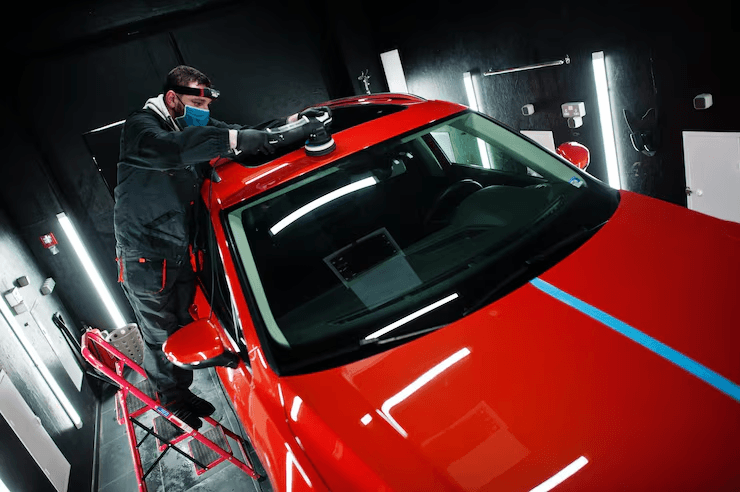
Toronto roads are not gentle. Winters bring road salt that eats into paint over months without anyone noticing until the damage is already done. Construction zones scatter gravel across lanes. Highway driving sends debris flying at speeds that leave micro-scratches across hoods and bumpers. Most car owners accept this as part of owning a vehicle in the city. A growing number of them have decided they would rather not.
That shift in thinking is exactly why PPF shops in Toronto have been seeing more business from people who are not driving luxury vehicles. Regular car owners, people with mid-range sedans and family SUVs, are starting to treat paint protection film as a practical investment rather than an optional luxury. The math makes sense when you look at what repainting a hood or bumper actually costs versus protecting it up front.
Workshops like the Colibri Car Wrap and Detailing have been part of that conversation for a while now. Their approach to PPF installation focuses on precision fitment and finish quality, ensuring the film goes on virtually invisible and stays that way for years. Customers who come in skeptical about whether it will look natural tend to leave surprised by how seamless the result actually is.
What PPF Actually Is and Why It Works
Paint protection film is a thermoplastic urethane layer applied directly over the vehicle’s painted surfaces. It is transparent, flexible, and engineered to absorb the kind of impacts that would otherwise leave permanent marks on bare paint. Small stone chips, light scratches from brushing against something, even fingernail marks from someone leaning against the car in a parking lot. The film takes the hit instead of the paint.
One of the more interesting properties of modern PPF is its self-healing capability. Minor surface scratches in the film can disappear on their own when exposed to heat, either from sunlight or warm water. The film’s topcoat has memory properties that allow it to return to its original smooth state after light abrasion. That feature alone changes how people think about day-to-day scratches on their vehicle.
The film also acts as a barrier against environmental contamination. Bird droppings, tree sap, and road tar all contain compounds that bond to paint and cause staining or etching when left untreated. PPF provides those contaminants a surface to sit on that can be cleaned without risking the underlying paint.
Toronto Specifically Is Hard on Vehicle Paint
This is worth spending a moment on because not every city puts the same kind of stress on a car’s exterior. Toronto winters involve road salt application on a scale that creates a genuinely corrosive environment for vehicles. Salt residue accumulates in wheel arches, along rocker panels, and on lower body sections that are splashed by other vehicles. Over several winters, that exposure works its way through the clearcoat and into the base layers.
Summer brings its own issues. Construction activity across the city means loose aggregate on roads at any given time. The Gardiner, the 401, and the DVP are all high-speed routes with enough truck traffic to keep the risk of stone chips consistently high regardless of the season. A car that commutes regularly through those corridors accumulates micro-damage each week, most of which remains invisible until it adds up to something obvious.
PPF does not eliminate road hazards. It creates a sacrificial layer between those hazards and the paint beneath, which is a meaningful distinction for anyone who has paid for a repaint and watched the same damage start to accumulate again within a year.
What the Installation Process Looks Like
People sometimes assume PPF installation is a quick job. It is not, and any shop that treats it that way is worth being cautious about. A proper installation starts with a thorough decontamination wash to remove any bonded surface contaminants that would otherwise get trapped under the film. Paint correction often follows, addressing any existing swirl marks or light scratches before the film goes on. There is no point in protecting imperfect paint without fixing it first.
The film itself is either cut by hand or plotted using software patterns specific to the vehicle’s make and model. Computer-cut patterns tend to produce cleaner edges with less risk of visible seams. The film is applied wet, positioned carefully, and then squeegeed to remove water and air from underneath. Edges are tucked where possible to avoid exposed film edges that can lift over time.
Curing takes a few days. During that period, the film finishes bonding to the paint surface, and any residual haze from installation clears up. Most shops advise against washing the vehicle during that window.
See also: Planning Ahead for Off-Season Revenue Gaps in Lawn Care Businesses
How Long PPF Actually Lasts
Quality PPF from reputable manufacturers carries a 10-year warranty when properly installed and maintained. That figure covers issues such as yellowing, cracking, peeling, and delamination. What it does not cover is physical damage beyond the film’s protective threshold, which is worth understanding clearly before assuming the film is indestructible.
Regular maintenance extends both the film’s appearance and its lifespan. Washing the vehicle without harsh chemicals, avoiding automatic car washes with abrasive brushes, and periodically applying a PPF-compatible sealant all help keep the film performing as designed.
When the film reaches the end of its life, it can be removed without damaging the paint underneath, provided it was installed correctly in the first place. That is actually one of the less obvious benefits of PPF. The paint that comes off the factory line is preserved beneath the film in its original state, which matters to anyone who cares about long-term vehicle value.
Wrapping Up
Toronto is not an easy city for vehicle exteriors. The combination of winter road salt, construction debris, and high-speed highway driving creates a sustained level of paint stress that adds up quietly over the years. PPF does not change the road conditions. It changes how much of that damage actually reaches the paint. For car owners who plan to keep their vehicle for several years, or who simply want to stop watching their paint deteriorate one chip at a time, it is a decision that tends to make more sense the more you think about it.