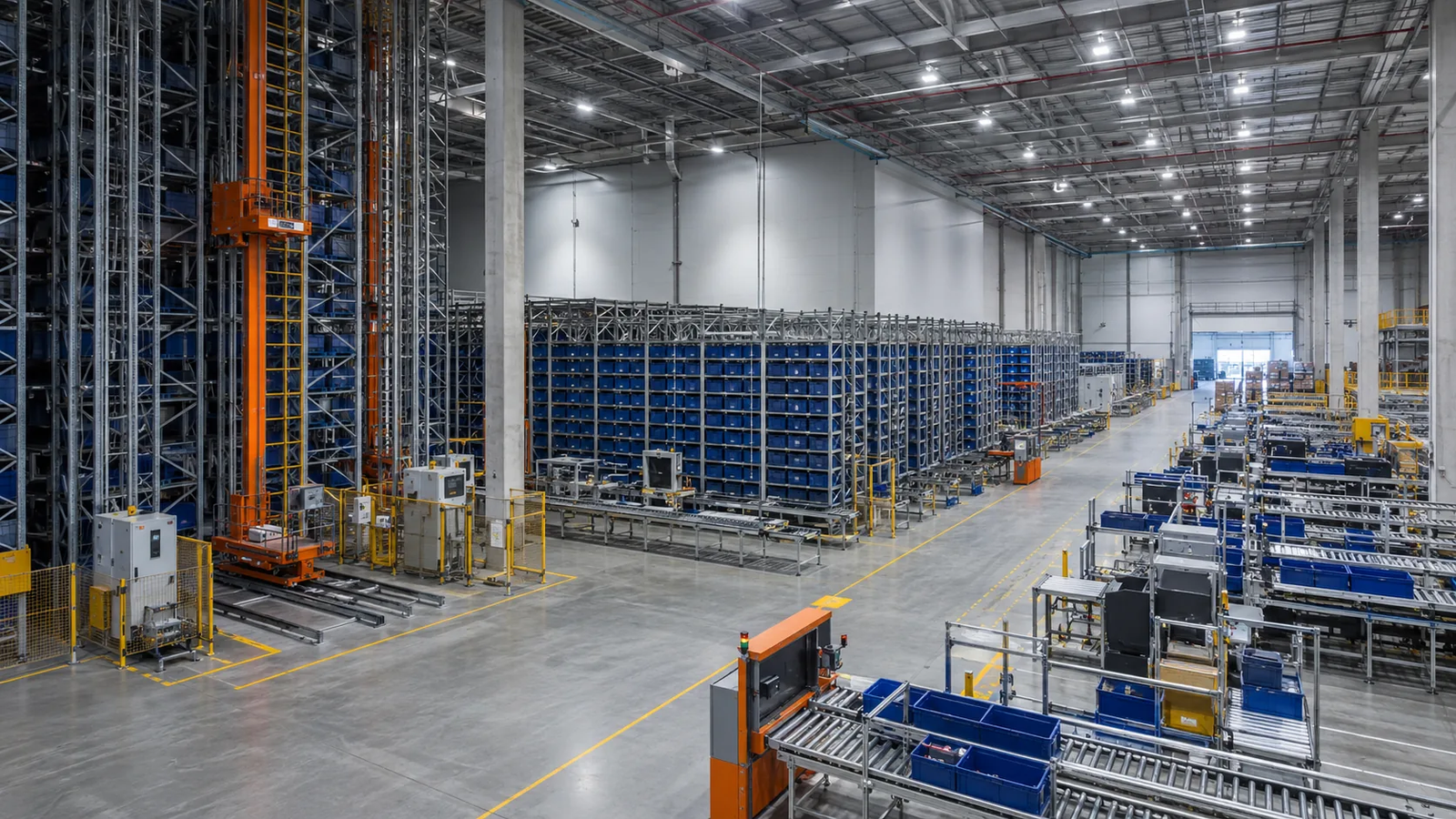
Every warehouse manager running out of floor space eventually asks the same question: build out, or build up. ASRS often comes up as the answer before anyone’s actually confirmed it’s the right fit for the operation. It’s a serious investment, and getting it wrong is expensive in a way that’s hard to undo once the system is installed. Before signing off on anything, it’s worth having a real conversation with an ASRS company about what your specific volume, SKU mix, and throughput actually require, because the answer isn’t the same for every facility.
ASRS looks impressive on paper. Higher storage density, faster retrieval, less labor walking the floor. All true, in the right conditions. The problem is that a lot of facilities adopt it because it’s trending, not because their operation actually needs it.
What Makes a Warehouse a Good Candidate
Ceiling height matters more than most people expect going in. ASRS earns its value by using vertical space that pallet racking and forklifts can’t reach efficiently. A facility with eighteen or twenty feet of clear height doesn’t get nearly the same payoff as one with thirty-five feet or more. If your building is short, you’re paying for a system that can’t fully do what it’s designed to do.
SKU velocity is the other big factor. ASRS shines with high-turn inventory where speed and accuracy matter more than flexibility. If your operation deals with a lot of odd-sized, slow-moving, or highly variable inventory, a more flexible racking and picking setup might actually outperform it. Automation rewards consistency. The less consistent your inventory profile, the less return you’ll see.
Labor cost and availability play into this too, and it’s not just about wages. In markets where warehouse labor is hard to find or retain, automation solves a real operational problem beyond just saving money. In markets where labor is stable and reasonably priced, the payback period stretches out considerably, and that changes the math on whether it’s worth it right now versus in a few years.
Where ASRS Tends to Underdeliver
Seasonal spikes are one of the more common places ASRS disappoints people. A system sized for average daily volume can struggle when demand triples for six weeks around a peak season. Sizing an ASRS system means planning for the busiest realistic day, not the average one, and that changes both the cost and the footprint significantly.
Product variability is another sticking point. Irregular shapes, fragile items, or products that change dimensions frequently can cause real headaches for automated storage and retrieval. Some systems handle this better than others, but it’s a conversation that needs to happen early, not after the equipment is already ordered.
Maintenance dependency is worth being honest about too. ASRS systems are mechanically and electrically complex, and downtime on a fully automated system tends to hit harder than downtime on a conventional operation, simply because there’s no manual fallback built in. If a shuttle or crane goes down and there’s no backup process, that section of the warehouse effectively stops.
Cost Considerations Beyond the Equipment Price Tag
The sticker price on an ASRS system is only part of the real cost. Site prep, structural reinforcement, electrical upgrades, and integration with your warehouse management software all add up, sometimes to more than the equipment itself. This is where the building side of the project matters just as much as the automation side, and it’s part of why facilities often end up working with a commercial construction company alongside their automation vendor rather than treating the two as separate projects.
Installation timelines also tend to run longer than people budget for. Between design, permitting, structural work, and commissioning, a full ASRS rollout can take months longer than a comparable racking installation. That extended timeline needs to be part of the decision from day one, not something discovered halfway through.
Ongoing costs matter as much as the upfront investment. Software licensing, technical support contracts, and specialized maintenance staff are recurring expenses that don’t show up on the initial quote but show up every month after installation. A facility manager who only budgets for the install and not the operating cost is going to have an uncomfortable conversation with finance a year in.
Comparing ASRS to Storage Racking Solutions
Not every warehouse needs to choose between fully automated and fully manual. A lot of operations land somewhere in between, using conventional storage racking solutions in some zones and automation in others based on what each area actually handles. High-velocity SKUs might justify automation while slower-moving overflow stock stays on standard pallet racking.
This hybrid approach tends to get overlooked because ASRS conversations often get framed as all-or-nothing. In reality, a phased approach lets a facility test automation in one zone, learn from it, and expand only if the numbers support it. That’s a much lower-risk way to validate the investment than committing to a full-facility rollout on projected numbers alone.
Racking is also far more adaptable to change. If your product mix shifts significantly, reconfiguring conventional racking is straightforward. Reconfiguring an ASRS system to handle a fundamentally different product profile is a much bigger undertaking, and sometimes not realistic without significant rework.
Getting the Right Guidance Before You Commit
This is a decision that benefits from an outside perspective, ideally from a warehouse automation systems integrator who isn’t just trying to sell you the biggest system possible. A good integrator will actually ask about your growth projections, your current pain points, and your budget constraints before recommending anything, rather than pitching the same solution to every facility that walks through the door.
It also helps to talk to a team that handles both the automation and the construction side, since so much of the real cost and complexity sits at that intersection. If you’re weighing ASRS against a racking expansion or trying to figure out whether your facility can even support it structurally, it’s worth having that conversation before committing to a design. You can contact us to walk through your specific space, volume, and goals.
The right answer depends entirely on your building, your inventory, and your growth plans over the next several years, not on what a competitor down the road just installed. ASRS is a strong tool in the right situation, but it’s not a default upgrade every high-density warehouse needs to make.